












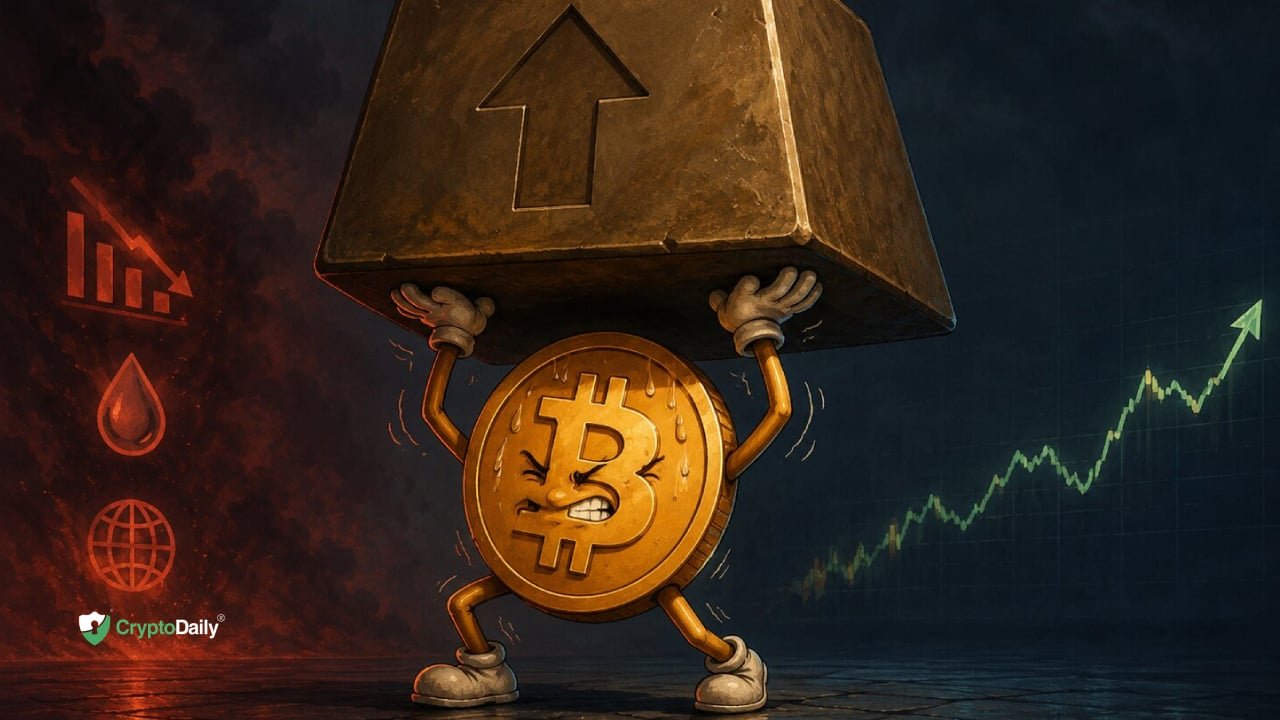
Bitcoin was created outside the central banking system, but it does not trade outside the global financial system. That is why every shift in Federal Reserve language can still affect crypto sentiment, even when Bitcoin’s long-term thesis is built around scarcity, decentralization, and monetary independence.
The current concern is not only whether the Fed raises rates at the next meeting. The bigger issue is whether investors need to price in a longer period of restrictive policy, stronger real yields, tighter liquidity, and less appetite for speculative risk. In that environment, Bitcoin can still attract long-term believers while facing shorter-term pressure from macro-sensitive traders.
This guide explains why Fed rate hike fears still matter for Bitcoin, how higher rates affect crypto markets, what traders and long-term holders should watch, and how to separate useful macro signals from headline noise.
Key Takeaways
Point Details Higher rates still matter Bitcoin may be decentralized, but its market price is influenced by liquidity, yields, the dollar, and investor risk appetite. Fed language can move markets Even without an immediate hike, hawkish guidance can tighten financial conditions and affect crypto positioning. Bitcoin is not only a macro asset Scarcity, ETF demand, custody infrastructure, and long-term adoption matter, but they do not erase rate sensitivity. Traders should watch expectations Markets often react more to changes in expected policy than to the rate decision itself. Risk management is essential Leverage, overconcentration, and emotional trading can turn macro volatility into avoidable losses.
The Fed Signal Behind the Latest Bitcoin Anxiety
The Federal Reserve held the federal funds target range at 3.50% to 3.75% at its April 2026 meeting, while saying it would assess incoming data, the evolving outlook, and the balance of risks before making further policy adjustments. That language matters because markets do not trade only on what the Fed has already done; they trade on what investors believe the Fed may do next. (Federal Reserve)
For Bitcoin, this creates a difficult backdrop. A market that had been preparing for future cuts can reprice quickly if traders begin to believe rates may stay restrictive for longer or that another hike is possible. That repricing can affect Treasury yields, the dollar, ETF flows, derivatives leverage, and risk appetite across crypto markets.
Bitcoin often holds up better than smaller crypto assets during macro stress because it has deeper liquidity, broader institutional recognition, and a clearer long-term narrative. However, it is not immune to a broad risk-off move. When investors reduce exposure to volatile assets, Bitcoin can be affected even if its underlying network fundamentals remain unchanged.
Why Higher Rates Can Pressure Bitcoin Even Without a Hike
A Fed rate hike is not the only issue for Bitcoin. Sometimes the fear of a hike is enough to change market positioning.
Higher rates affect Bitcoin through the opportunity cost of capital. When cash, Treasury bills, and money-market instruments offer meaningful yields, investors have more low-volatility alternatives. Bitcoin does not pay interest, dividends, or cash flow. Its investment case depends on scarcity, adoption, market demand, liquidity, and the belief that it can serve as a long-term monetary asset.
That does not make Bitcoin weak. It simply means the hurdle rate rises when safer assets offer attractive nominal yields. In a higher-rate environment, investors tend to become more selective. Speculative positions may be reduced, leverage may come down, and capital may rotate toward assets with clearer income or lower volatility.
Higher-rate fears can also support the U.S. dollar. Because Bitcoin is commonly priced in dollars, a stronger dollar can create pressure across global crypto markets. For non-U.S. investors, a stronger dollar can make dollar-denominated assets more expensive. For leveraged traders, dollar strength often appears alongside tighter liquidity and more cautious positioning.
The biggest mistake is assuming Bitcoin must always fall when rates rise. The relationship is not mechanical. Bitcoin can still perform well during restrictive policy if demand is strong, ETF inflows are supportive, supply is tight, or investors treat it as a hedge against monetary and fiscal instability. But higher-rate fears usually make the short-term path harder.
Bitcoin Is More Than a Liquidity Trade, But Liquidity Still Matters
Bitcoin has matured from a niche digital asset into a global macro-sensitive market. Institutional access, spot ETF infrastructure, custody improvements, derivatives liquidity, and broader recognition have changed how it trades. Crypto assets are increasingly monitored alongside traditional market variables such as interest rates, financial conditions, and risk sentiment. (Federal Reserve Bank of New York)
That does not mean Bitcoin is only a liquidity trade. Its fixed issuance rules, censorship-resistant settlement, global transferability, and network security remain central to its long-term thesis. But liquidity helps determine how much risk investors are willing to carry at a given moment.
It is useful to think of Bitcoin as having two layers. The first layer is the long-term asset thesis: scarcity, decentralization, self-custody, institutional adoption, and potential demand from investors looking outside traditional monetary systems.
The second layer is market structure: ETF inflows and outflows, derivatives leverage, funding rates, exchange liquidity, stablecoin supply, and macro-driven capital rotation.
Fed rate hike fears mostly hit the second layer. They can force traders to reduce exposure, make market makers more cautious, increase volatility, and weaken short-term demand. If this happens while long-term holders remain confident, the market may consolidate rather than collapse. If it happens alongside forced liquidations, weak ETF demand, and deteriorating risk sentiment, the reaction can be sharper.
What Traders Should Watch Around Fed Meetings
Bitcoin traders should avoid reducing Fed analysis to “hike equals bearish, cut equals bullish.” Markets are forward-looking. The actual decision may matter less than how it compares with expectations.
Policy expectations
The first question is what the market expected before the decision. If traders were already pricing in a hawkish outcome, Bitcoin may not fall much when the Fed confirms it. If the Fed sounds more hawkish than expected, volatility can rise quickly. Tools based on fed funds futures, such as CME FedWatch, are commonly used to monitor how rate expectations shift before and after key data releases. (CME FedWatch)
Statement language
Small wording changes matter. A shift from easing language to two-sided or tightening language can affect yields and risk appetite even if the policy rate stays unchanged. Traders should read the statement, not only the headline.
Treasury yields and the dollar
Bitcoin often reacts to changes in short-term Treasury yields because they reflect expectations for monetary policy. A rising two-year yield and stronger dollar can suggest tighter financial conditions, which may pressure risk assets.
Crypto leverage
If funding rates are elevated and traders are crowded long, even a mild hawkish surprise can trigger liquidations. If leverage has already reset, Bitcoin may absorb negative macro news more calmly.
For active traders, the practical lesson is simple: do not trade Fed events with oversized leverage. Spreads can widen, price can whipsaw in both directions, and stop-losses can trigger before the market chooses a clearer direction. A smaller position with a defined invalidation level is usually more rational than trying to predict every short-term move after the FOMC statement.
How Long-Term Holders Can Think About Rate-Hike Fear
Long-term Bitcoin holders do not need to ignore the Fed. They need to put Fed risk in the right category.
A rate-hike scare is usually a market-cycle and liquidity risk, not automatically a Bitcoin network risk. It does not change Bitcoin’s supply schedule. It does not change Bitcoin’s settlement function. It does not change the fact that users can self-custody BTC without relying on a bank.
However, it can affect the price investors are willing to pay today.
For long-term holders, the main question is not only “Will the Fed raise rates next month?” A better question is: “Would my Bitcoin thesis still make sense if liquidity stayed tight for longer than expected?”
That question leads to more practical decisions. Investors can review position size, custody setup, cash reserves, and time horizon. Someone who may need funds in six months has a different risk profile from someone building a multi-year allocation. A long-term thesis does not remove the need for liquidity planning.
Dollar-cost averaging can help some investors reduce timing stress, but it should not be treated as a guarantee. It works best when position size is realistic, the investor understands volatility, and there is no dependence on short-term gains.
The key mistake is using long-term language to justify short-term overexposure. Saying “Bitcoin is a long-term asset” does not help if a leveraged position gets liquidated during a Fed-driven volatility spike.
A Practical Macro Checklist Before Reacting to Fed Headlines
Before buying, selling, or increasing risk because of a rate-hike headline, crypto investors can run through a simple checklist.
Question Why It Matters Did the Fed actually change policy, or did expectations change? Markets often move because expectations shift, not because the rate changed immediately. Are Treasury yields rising with the dollar? Rising yields and a stronger dollar can tighten financial conditions for risk assets. Is Bitcoin moving alone or with equities? If BTC falls with stocks, the driver may be macro risk-off rather than crypto-specific weakness. Are ETF flows supportive or weakening? Institutional demand can cushion Bitcoin, while outflows can amplify pressure. Is leverage crowded? High leverage increases liquidation risk during Fed-driven volatility. Has the long-term thesis changed? Macro stress may change price action without changing Bitcoin’s underlying network fundamentals.
This checklist helps prevent emotional decisions. A hawkish headline may be important, but it is not always a reason to panic. The better approach is to identify whether the news changes liquidity, market structure, or the investment thesis.
For beginners, the safest move is often to slow down. Read the actual Fed statement, wait for the first volatility wave to pass, and check whether Bitcoin is reacting differently from broader risk assets.
For traders, the focus should be on positioning and invalidation levels. For investors, the focus should be on allocation size and time horizon.
What Could Change the Bitcoin Outlook
The Bitcoin outlook could improve if inflation cools convincingly, the Fed becomes more comfortable discussing cuts, Treasury yields decline, and risk appetite returns. In that scenario, Bitcoin could benefit from easier financial conditions and renewed demand for scarce digital assets.
ETF demand is another major variable. Strong spot Bitcoin ETF inflows can offset some macro pressure because they represent a regulated access channel for institutions and traditional investors. But ETF flows can also reverse, especially when macro conditions become less supportive.
The outlook could weaken if inflation remains sticky, energy prices stay elevated, the Fed signals a longer restrictive period, or markets price in additional hikes. That would likely keep pressure on speculative assets and make rallies more fragile.
There is also a middle scenario: Bitcoin trades sideways while the market waits for clearer macro data. This can be frustrating, but it is common when investors are balancing competing narratives. One group sees Bitcoin as a long-term monetary asset. Another treats it as a high-beta liquidity asset. During uncertain Fed regimes, both groups influence price action.
The most realistic view is that higher rates do not destroy Bitcoin’s long-term case, but they can change timing, volatility, and risk appetite. Investors who understand that distinction are less likely to overreact.
Using Crypto Daily to Stay Grounded
Crypto Daily helps readers follow Bitcoin, macro policy, altcoins, regulation, DeFi, and Web3 trends without relying on hype-driven market narratives. For topics like Fed rate-hike fears, the goal is not to predict every short-term move, but to understand the forces shaping market behavior.
When macro conditions change quickly, a disciplined research process matters: read primary sources, track market expectations, compare Bitcoin with broader risk assets, and avoid treating any single headline as a complete investment thesis.
Frequently Asked Questions
Why does Bitcoin react to Fed rate hike fears?
Bitcoin reacts because higher-rate expectations can reduce risk appetite, strengthen the dollar, increase Treasury yields, and tighten liquidity. Even though Bitcoin is decentralized, its market price is still influenced by global capital flows.
Are higher interest rates always bad for Bitcoin?
No. Higher rates can pressure Bitcoin, but the relationship is not automatic. Bitcoin can still perform well if demand is strong, ETF flows are supportive, leverage is healthy, or investors view it as a hedge against broader monetary and fiscal risks.
What matters more for Bitcoin: the actual Fed decision or market expectations?
Market expectations often matter more. If traders already expect a hawkish Fed, the decision may be priced in. A surprise shift in guidance, inflation forecasts, or policy language can create a larger reaction.
Should beginners avoid buying Bitcoin during rate-hike fears?
Beginners should avoid impulsive decisions, not necessarily avoid Bitcoin altogether. The better approach is to understand volatility, use realistic position sizing, avoid leverage, and consider whether the investment horizon is long enough to absorb macro-driven swings.
How can traders manage Fed-related Bitcoin volatility?
Traders can reduce position size, avoid excessive leverage, define invalidation levels before entering, monitor Treasury yields and the dollar, and be cautious around FOMC statements and press conferences.
Do Fed rate hikes affect altcoins more than Bitcoin?
Often, yes. Altcoins are usually more sensitive to liquidity conditions, speculation, and risk appetite. When higher-rate fears hit the market, Bitcoin may still decline, but smaller or less liquid tokens can experience larger moves.
What should investors watch next?
Key signals include inflation data, Fed meeting language, Treasury yields, dollar strength, Bitcoin ETF flows, derivatives leverage, and whether Bitcoin is moving with or diverging from broader risk assets.
Disclaimer: This article is provided for informational purposes only. It is not offered or intended to be used as legal, tax, investment, financial, or other advice.