












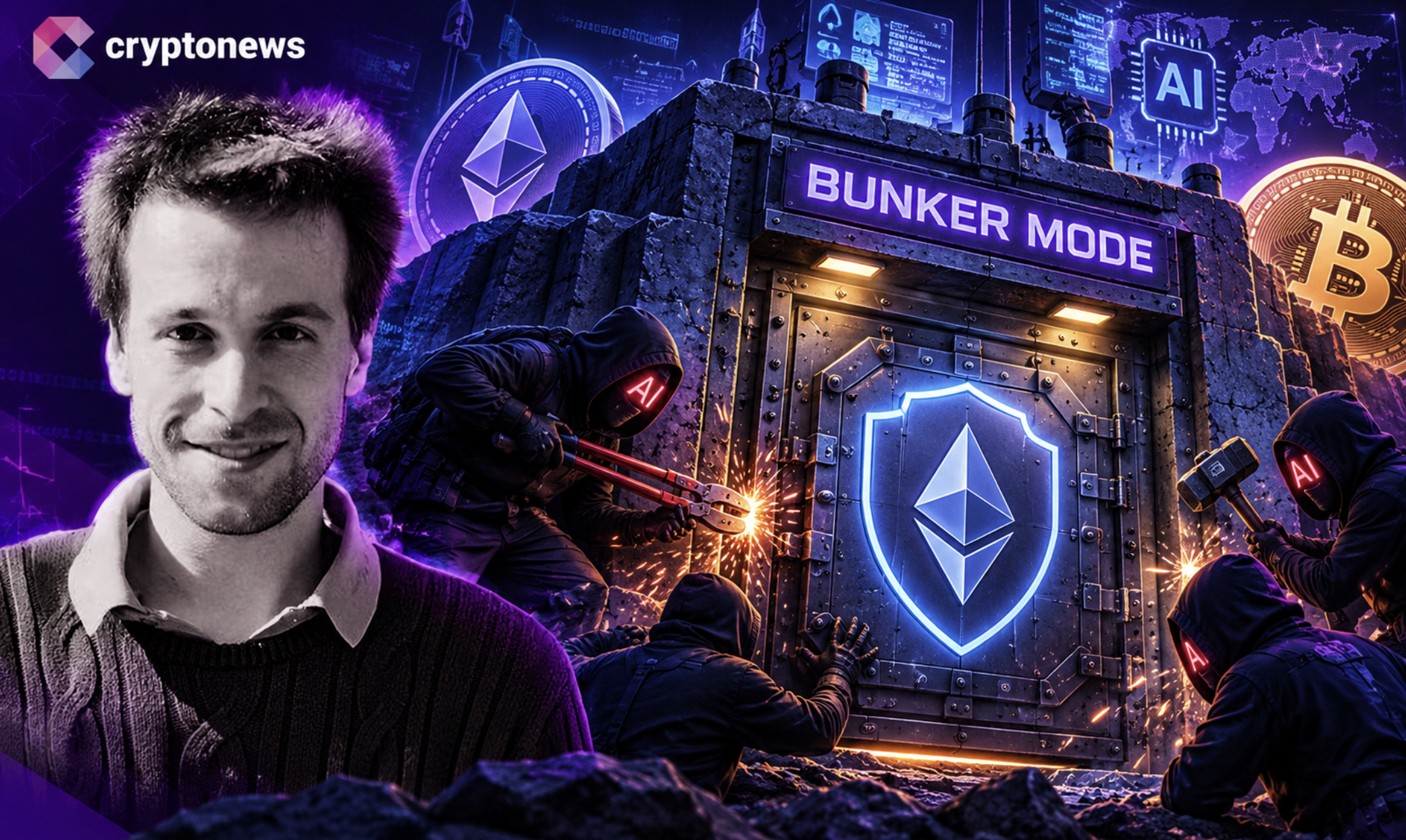
What is Crypto bunker mode? Ethereum Foundation researcher Justin Drake urged the crypto industry on October 7, 2026, to plan a controlled migration of funds to fresh addresses with unexposed public keys.
His “bunker mode” proposal addresses a hypothetical AI-assisted break of ECDSA before quantum computing reaches “Q-Day”; it is not evidence that AI has broken Bitcoin or Ethereum cryptography.
Drake’s post on X called for calm preparation: moving assets over time to addresses that have never signed a transaction. According to Drake, ECDSA, the signature scheme used by Bitcoin and Ethereum, verifies that a transaction was authorized by the holder of the relevant private key.
So, when an address signs a transaction, its public key becomes visible on-chain. A fresh address that has only received funds reveals an address hash instead, leaving the public key unexposed.
If ECDSA were broken, an attacker could theoretically use an exposed public key to recover the private key and drain the wallet. Drake defined a break as recovering a private key in about a week with available hardware, such as a large GPU cluster. That is the scenario he wants the industry to consider, not a capability that has been shown to exist.
Drake cited 722 mathematical results published by OpenAI as evidence of rapid AI-driven progress. Drake said holders should not panic or rush, and that moving funds does not require new cryptography or wallets.
He also urged Binance, Bitbank, Robinhood, Bitfinex, and Tether to strengthen cold storage. Those recommendations put key management and controlled address migration at the center of the near-term response, rather than suggesting that users abandon existing networks.
Earn $50 and Enter $300K Prize Draw on EdgeXWhat Is AI Cryptography, “Crypto Q-Day,” and Why Is Bunker Mode Needed
Q-Day describes the point when quantum computers become powerful enough to break cryptographic systems used today. Drake has warned for years about that longer-term threat. His latest concern is different: an AI-assisted mathematical attack using conventional computing hardware could, in the worst case, undermine ECDSA before quantum computers are ready.
Ethereum’s account-security exposure is specifically tied to ECDSA and public keys revealed by signed transactions; it does not mean that all Ethereum cryptography has failed.

The Ethereum Foundation formed a dedicated post-quantum team earlier in 2026, while Vitalik Buterin has outlined plans for quantum-resistant cryptography. Drake said he would push to accelerate the network’s move toward hash-based cryptography, a central part of Ethereum’s post-quantum security.
The distinction between cryptographic risk and other wallet vulnerabilities remains important. An exploit involving an Ethereum wallet component, such as the Safe Wallet exploit tied to Aave’s FlashloanAdapter, is not evidence that ECDSA itself has been broken.
Drake said he would push for “maximum defensive acceleration” of Ethereum’s roadmap toward hash-based cryptography and called on major custodians to harden cold storage. ETH is to plan the technical transition and strengthen custody practices without treating a hypothetical attack as a present fact.
For now, it is not about what “bunker mode” is; a preparedness proposal built around crypto public-key exposure and gradual migration is needed.
Discover: The Best Token Presales
Source: Crypto News