











Crypto has spent years telling users that public blockchains are transparent by design. That transparency helps with auditing, analytics, exchange monitoring, and institutional compliance. But it also creates a problem: wallet balances, transaction flows, counterparties, and behavioral patterns can often be observed by anyone with the right tools.
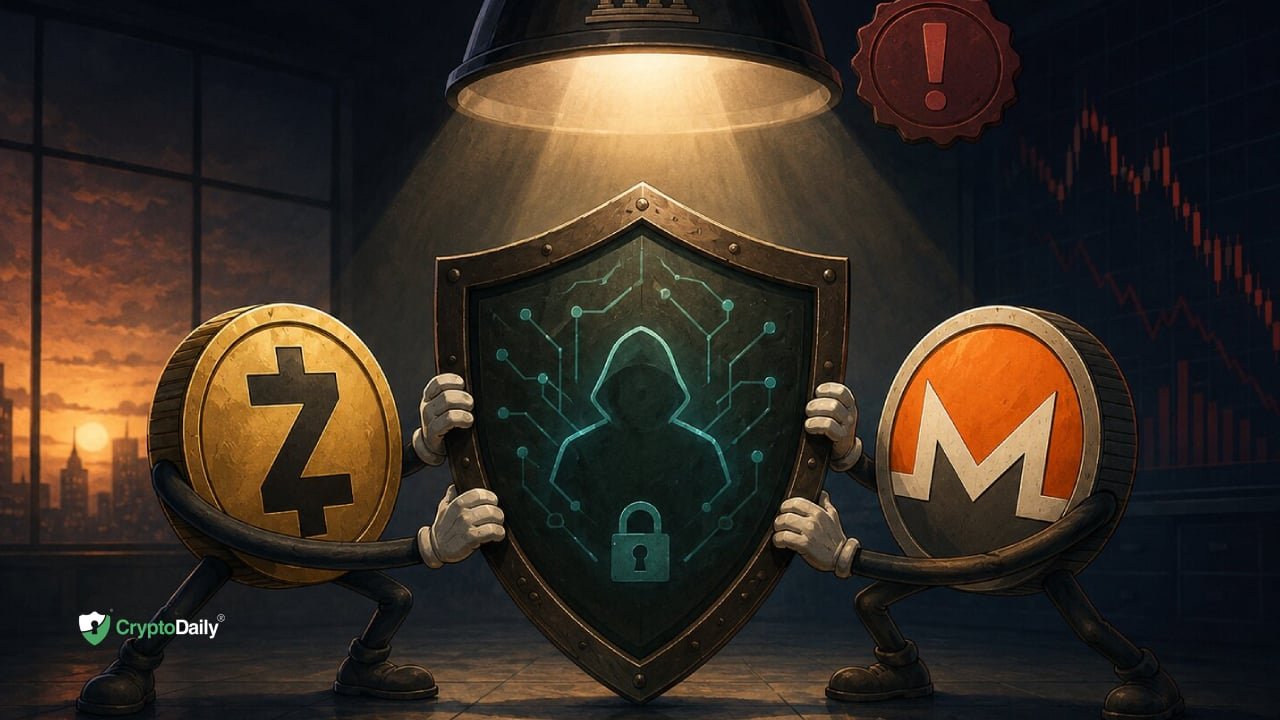
That is why privacy coins remain one of the most controversial areas of crypto in 2026. Zcash and Monero sit at the center of that debate. Both projects aim to protect financial privacy, but they do it in very different ways. Zcash offers optional privacy with selective disclosure features. Monero makes privacy the default for every transaction.
For crypto investors, traders, and Web3 users, the real question is not only which asset is more private. The better question is which risk profile makes more sense: Zcash’s more flexible privacy model, or Monero’s stronger but more regulatory-sensitive approach.
This article is for educational purposes only and should not be treated as financial, tax, or legal advice.
Key Takeaways
Point Details Zcash has the more flexible regulatory story Zcash supports transparent and shielded transactions, plus viewing keys for selective disclosure. Monero has stronger default privacy Monero hides sender, receiver, and amount by default, making privacy part of normal network usage. Regulation is a major part of the investment case Privacy coins face listing, liquidity, custody, and fiat off-ramp risks. Optional privacy is not automatic privacy Zcash users must actually use shielded features for privacy benefits to matter. Always-on privacy has trade-offs Monero’s privacy-first design can make it harder for regulated exchanges and custodians to support.
The 2026 Privacy Coin Setup
The privacy coin conversation is not only about hiding transactions. It is about whether public blockchains can support serious financial activity without exposing too much user information.
On Bitcoin, Ethereum, and many other public networks, transaction histories are visible. This can be useful for transparency, but it can also create privacy risks for individuals, funds, companies, and high-value wallets. A user who receives salary payments, business revenue, donations, or DeFi proceeds may reveal more than intended.
That gives privacy coins a clear narrative in 2026. As crypto becomes more integrated with payments, trading, custody, and real-world financial services, the need for private settlement does not disappear. In some ways, it becomes more important.
Grayscale Research has also pointed to privacy as a renewed crypto market theme, noting increased interest around assets such as Zcash as shielded usage becomes more visible in market discussions. (Grayscale Research)
Still, investors should be careful. A strong narrative does not remove execution risk. Privacy coins can face sudden exchange restrictions, fragmented liquidity, higher compliance scrutiny, and legal uncertainty depending on the user’s jurisdiction.
Zcash: Optional Privacy With a Compliance Angle
Zcash is a proof-of-work privacy coin that uses zero-knowledge cryptography to support shielded transactions. Its main distinction is optional privacy. Users can send transparent transactions, shield funds, deshield funds, or transact privately between shielded addresses.
According to Zcash documentation, transparent transactions work in a way that resembles Bitcoin, where key transaction details are publicly visible. Shielded Zcash transactions can encrypt sender, receiver, and amount, while viewing keys allow users to share transaction details with selected third parties when needed. Zcash also has a fixed maximum supply of 21 million ZEC. (Zcash Documentation)
Why Zcash appeals to the 2026 market
Zcash’s investment case is not simply that it is a privacy coin. Its broader appeal is that it offers privacy with a clearer compliance story than many privacy-first alternatives.
This matters because not every user wants total opacity in every context. A business may want to keep transactions private from the public while still being able to disclose records to an auditor, accountant, tax professional, or regulator. Zcash’s selective disclosure model makes that conversation easier.
That does not mean Zcash is free from regulatory risk. It means its design gives it more flexibility. For investors who want exposure to the privacy narrative but worry about exchange delistings and institutional accessibility, that flexibility is one of Zcash’s strongest advantages.
The Zcash risk beginners often miss
Optional privacy only works when people use it correctly. If many users transact transparently, or if funds constantly move between transparent and shielded addresses, privacy can become uneven.
A shielded transaction can protect important details, but users may still leak information through exchange deposits, withdrawal timing, wallet behavior, address reuse, or poor operational security. For this reason, Zcash should not be evaluated only by its cryptography. Investors should also watch wallet adoption, shielded pool usage, exchange support, development activity, and real user behavior.
Monero: Stronger Default Privacy, Sharper Regulatory Pressure
Monero takes a different path. Privacy is not an optional feature. It is the default network behavior.
Monero describes itself as a cryptocurrency focused on private and censorship-resistant transactions. Its privacy model is designed to hide sender, receiver, and amount by default using technologies such as stealth addresses, ring signatures, and RingCT. (Monero)
This makes Monero attractive to users who want fungibility. On transparent blockchains, coins can sometimes be treated differently depending on their transaction history. Funds connected to hacks, sanctions exposure, darknet markets, or suspicious addresses may become harder to move through regulated services. Monero’s design aims to make coins less distinguishable by history.
Why Monero remains the privacy benchmark
Monero’s strongest argument is simple: privacy should not depend on the user making the right technical choices every time.
With optional privacy, users must understand address types, wallet settings, shielding, deshielding, and metadata risks. With Monero, privacy is built into ordinary usage. That gives Monero a strong claim as the more coherent cash-like privacy asset.
Monero also has a different monetary model from Zcash. It does not have a fixed maximum supply. Its tail emission began in 2022 and continues at 0.6 XMR per block, which the project presents as a way to maintain long-term miner incentives while inflation trends lower over time. (Monero FAQ)
The Monero risk investors often underprice
Monero’s strength is also its main market risk. Because privacy is mandatory, regulated exchanges and custodians may find XMR harder to support.
This can reduce fiat access, limit liquidity, widen spreads, and make institutional adoption more difficult. If fewer major venues support XMR, price discovery can become more fragmented, especially during volatile market conditions.
Binance announced that it would delist Monero spot trading pairs in 2024, citing review factors such as liquidity, development activity, network stability, and regulatory requirements. (Binance)
For a privacy coin, access matters. If a user cannot easily buy, sell, withdraw, or custody an asset through trusted venues, the investment case changes even if the underlying technology remains strong.
ZEC vs XMR: Side-by-Side Comparison
Factor Zcash (ZEC) Monero (XMR) Privacy model Optional privacy through transparent and shielded transactions Private by default Main privacy tools Zero-knowledge proofs, shielded addresses, viewing keys Stealth addresses, ring signatures, RingCT Compliance flexibility Stronger because selective disclosure is possible Weaker because every transaction is designed to be private User experience risk Users may fail to use shielded features properly Privacy is easier by default, but exchange access may be harder Supply model Fixed maximum supply of 21 million ZEC Tail emission with no fixed maximum supply Exchange risk Meaningful, but often less severe than Monero because of optional transparency Higher due to mandatory privacy and past delistings Main narrative Privacy plus institutional accessibility Pure privacy, fungibility, and censorship resistance Main mistake to avoid Assuming all ZEC activity is private Ignoring liquidity and delisting risk
Where Regulatory Risk Changes the Investment Case
Privacy coins are not judged only by users. They are judged by exchanges, payment processors, custodians, banks, analytics vendors, and regulators. That makes regulatory exposure one of the most important parts of the Zcash vs Monero comparison.
The EU’s MiCA framework introduced a more unified crypto regulatory structure across Europe, covering areas such as transparency, disclosures, authorization, supervision, market integrity, and consumer risk information. (ESMA)
Privacy coins can create a harder compliance problem than ordinary transparent assets. Exchanges must consider anti-money-laundering obligations, transaction monitoring, banking relationships, travel rule requirements, and reputational risk.
Listing risk
An exchange can delist a privacy coin with limited notice. This may reduce liquidity and force users to withdraw, convert, or sell under pressure. For traders, delisting risk can matter as much as technical fundamentals.
Banking and fiat off-ramp risk
Even if an exchange wants to support a privacy coin, its banking partners or payment processors may not. This creates indirect pressure. Users may only notice the problem when deposits, withdrawals, or trading pairs are restricted.
Custody and institutional product risk
Regulated custodians, brokers, and asset managers may be cautious with privacy coins. Zcash has a more visible institutional pathway because its selective disclosure design is easier to explain, but institutional access should never be treated as guaranteed.
Global regulators continue to highlight virtual asset risks, especially where illicit finance, scams, sanctions evasion, and weak implementation of crypto standards are involved. This does not mean privacy coins are automatically illegal, but it does mean the regulatory environment can shift quickly. (FATF)
How to Evaluate Zcash or Monero Before Buying
A privacy coin investment should not start with a price chart. It should start with a practical risk checklist.
Check liquidity before looking at upside
Look at where the coin trades, whether the venue supports deposits and withdrawals, and whether volume is concentrated on only a few exchanges. If liquidity is thin, even a strong narrative can become dangerous during sell-offs.
Understand how privacy actually works
For Zcash, learn the difference between transparent and shielded transactions. For Monero, understand that privacy is default, but no system should be treated as magically risk-free. Wallet hygiene, exchange behavior, IP exposure, and operational mistakes can still matter.
Watch regulatory developments
Privacy coin rules vary by jurisdiction and can change. Users in Europe, the United States, Asia, and offshore markets may face different levels of access. Do not assume that because a coin trades somewhere today, it will remain available everywhere tomorrow.
Separate real utility from investor demand
A coin can be useful and still be a difficult investment. Monero may have strong privacy utility but weaker regulated exchange access. Zcash may have stronger institutional visibility but still depends on actual shielded adoption.
Avoid leverage on narrative-driven assets
Privacy coins can move aggressively when the market becomes interested in privacy again. They can also reverse quickly after regulatory headlines, delisting announcements, or liquidity shocks. Leverage can amplify both gains and losses, especially in assets where liquidity is uneven.
Which Privacy Coin Has the Better 2026 Narrative?
Zcash has the cleaner mainstream narrative in 2026. It offers privacy technology, a fixed supply, selective disclosure, and a more plausible route into regulated financial products. For investors who want privacy exposure without taking the full delisting risk of mandatory-privacy assets, ZEC may be easier to justify.
Monero has the stronger ideological and technical privacy narrative. If the thesis is that financial privacy should be default, not optional, XMR is the purer expression of that idea. It is harder to frame for institutions, but easier to understand for users who believe transparent blockchains are unsuitable for cash-like payments.
For privacy-first users, Monero is more aligned with the core purpose. For regulated-market investors, Zcash may be easier to access and explain. For active traders, liquidity, venue availability, and headline risk may matter more than ideology.
The biggest mistake is treating ZEC vs XMR as a simple winner-takes-all contest. They represent two different privacy philosophies. Zcash asks whether privacy can coexist with selective transparency. Monero asks whether privacy means anything if it is not the default.
Practical Checklist Before Choosing ZEC or XMR
- Check whether reputable exchanges in your jurisdiction support deposits, withdrawals, and trading.
- Review liquidity across multiple venues instead of relying on one exchange.
- Understand the difference between optional privacy and default privacy.
- Consider whether you need privacy for usage, portfolio diversification, trading, or research exposure.
- Avoid assuming that privacy technology removes tax, reporting, or compliance obligations.
- Use secure wallets and protect seed phrases carefully.
- Monitor regulatory updates, especially around exchange listings and fiat off-ramps.
- Avoid oversized positions in assets exposed to sudden delisting or liquidity shocks.
Crypto Daily: Follow the Privacy Coin Debate With Context
Crypto Daily covers market narratives, regulation, Web3 infrastructure, and altcoin research for readers who want more than hype-driven price commentary. As privacy coins return to the spotlight, the useful question is not only whether ZEC or XMR can rise, but whether the privacy narrative can survive exchange restrictions, custody limits, and shifting regulatory frameworks.
For readers tracking Zcash, Monero, and the wider privacy sector, Crypto Daily helps connect the technical story with the market and regulatory context that actually drives risk.
Frequently Asked Questions
Is Zcash more private than Monero?
Not by default. Monero is private by default, while Zcash offers optional privacy. A shielded Zcash transaction can provide strong privacy, but transparent Zcash transactions are publicly visible.
Is Monero riskier than Zcash?
From a regulatory and exchange-access perspective, Monero is generally riskier because its privacy is mandatory. From a privacy-purity perspective, some users may see Monero as stronger.
Can Zcash be used for compliant transactions?
Zcash has features that can support selective disclosure, including viewing keys. This can help users share transaction details with trusted parties, but it does not automatically make every Zcash use compliant.
Why do exchanges delist privacy coins?
Exchanges may delist privacy coins because of regulatory pressure, transaction monitoring challenges, liquidity concerns, banking partner risk, or internal compliance reviews.
Are privacy coins illegal?
Privacy coins are not treated the same in every jurisdiction. Some countries restrict exchange access or regulated services involving privacy coins, while others may allow ownership or trading under certain conditions.
Is ZEC or XMR better for beginners?
Neither is especially beginner-friendly compared with more widely supported crypto assets. Beginners should first understand custody, exchange access, wallet setup, liquidity, tax reporting, and regulatory risk.
Should investors choose Zcash or Monero in 2026?
It depends on the reason for exposure. Zcash may suit investors looking for a more flexible and institutionally explainable privacy narrative. Monero may suit users who value default privacy and fungibility more than regulated-market accessibility.
Disclaimer: This article is provided for informational purposes only. It is not offered or intended to be used as legal, tax, investment, financial, or other advice.